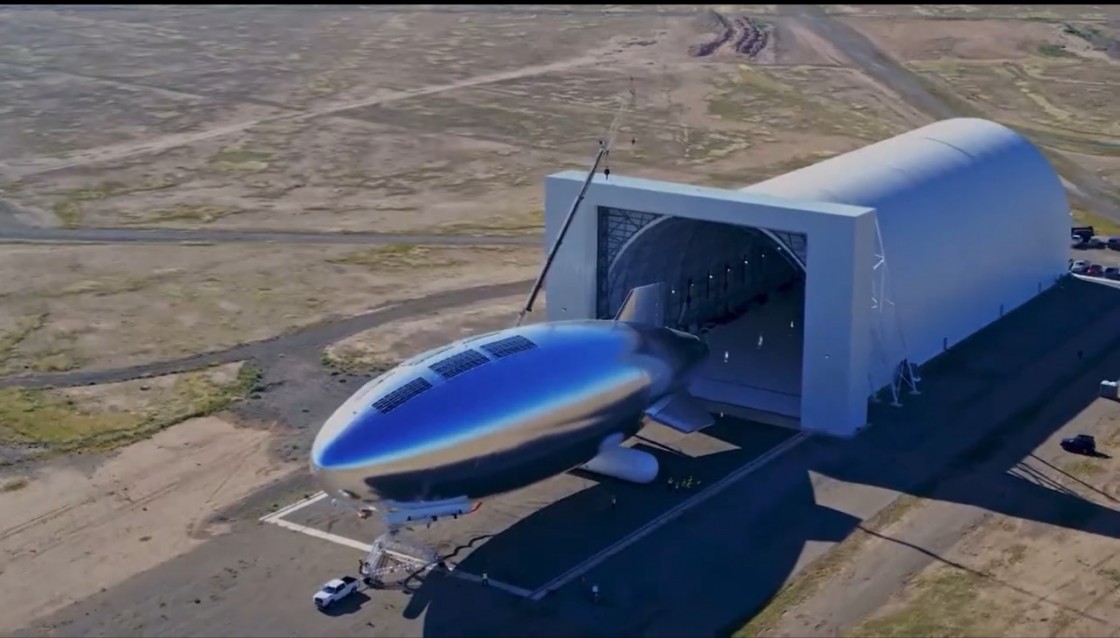
20 Great Reasons For Picking The Sceye Platform
How Sceye’s Stratospheric Airships Monitor Greenhouse Gases
1. The Monitoring Gap Is Larger Than Most People Realise
Climate change emissions around the globe are monitored through a patchwork of ground stations, occasional flight campaigns by aircraft and satellites operating hundreds and kilometres above the surface. Each has its limits. Ground stations are not as extensive and geographically biased towards wealthier countries. The aircraft campaign is expensive, short-duration, and narrow in their coverage. Satellites can be used to cover the globe but have difficulty with the resolution required to identify specific emission sources such as pipes that leak, landfill releasing methane, or an industrial facility which isn’t reporting its output. This results in surveillance systems with significant problems at the exact level where accountability and intervention are crucial. Stratospheric platforms are increasingly being looked at as the missing middle layer.
2. Altitude Creates a Monitoring Advantage Satellites Aren’t Able to Replicate
There’s an argument in geometry for that 20 kilometres are better than 500 kilometres for emissions monitoring. A sensor operating at a stratospheric altitude can observe a ground footprint of several hundred kilometers while still being close enough determine emission sources with sufficient precision — single facilities roads, road corridors and agricultural zones. Satellites viewing the same region from the low Earth orbits cover it much faster however, they are less precise and revisit time means a methane cloud that appears and goes away within a short time can never be able to be recorded at all. A platform holding its position in a specific area for a period of days or weeks for a period of time converts random snapshots into continuous surveillance.
3. Methane is the first priority target for a reason.
Carbon dioxide garners the most of the attention from the public, but methane is the greenhouse gas that short-term monitoring improvements can make the biggest practical difference. Methane’s effects are significantly greater than CO2 over a 20-year timeframe in addition to a significant percentage of methane emission from human activities comes from single sources — infrastructure for oil and gas production or waste facilities, agriculture and industrial operations. They are both detectable and, in many instances, repairable when identified. Monitoring methane in real-time from a persistent stratospheric platform means regulators, operators, and governments can discover leaks as they occur instead of finding them later, through annual inventory reconciliations which generally rely on estimates, not measurements.
4. Sceye’s Airship’s Design is Well Affitting to the Monitoring Mission
The traits that make for a good telecommunications platform and a top environmental monitoring platform meet more often than you expect. Both require a long-lasting endurance steady positioning, as well as sufficient payload capacity. Sceye’s lighter than air airship model can address all three. Because buoyancy performs the essential task of maintaining altitude this means that the system’s energy bill isn’t drained by the process of generating lift It’s used to power propulsion, station maintenance and for powering any sensor needs to be used for the mission. When it comes to monitoring greenhouse gases, specifically this means carrying instruments for spectrometers, imaging systems and data processing hardware without the extreme weight constraints that limit fixed-wing HAPS designs.
5. Station Keeping Is Not a Negotiable Option for useful environmental data
A platform that varies in its monitoring is a monitoring device that can generate unintelligible data. Knowing exactly where a sensors was when it recorded a reading is essential for attribution of this reading to the source. Sceye’s emphasis placed on accurate stationkeeping — keeping an unmoved position over a target area through active propulsion doesn’t only serve as the metric of technical performance. It’s what makes the data scientifically defensible. Stratospheric earth observation is only beneficial for regulatory or legal purposes if the positioning record is strong enough to stand to scrutiny. Drifting balloon platforms, however powerful their sensors are, don’t offer that.
6. The Same Platform can Monitor the effects of oil pollution and Wildfire Risk Simultaneously
One of the most fascinating aspect of the multipayload model is how the different environmental monitoring missions work together on the same vehicle. Airships that operate over the ocean or in coastal areas can carry sensors calibrated for detection of oil pollution, as well as those that monitor CO2 or methane. On land, the same platform architecture allows for wildfire detection technology, which identifies smoke plumes, heat signatures, and vegetation stress indicators which can precede ignition incidents. Sceye’s approach to mission design takes these into consideration not as separate programs that require separate aircrafts rather as parallel use cases for infrastructure that’s already in place and operating.
7. Detecting Climate Disasters during real time changes the Response Equation
There’s a significant difference between knowing that a forest fire began six hours ago and finding out it started 20 minutes in the past. The same is true of industrial accidents releasing poisonous gases, flood events risking infrastructure, or unexpected methane leaks from permafrost. The ability of detecting climate catastrophes in real time through a constantly operating stratospheric satellite gives emergency personnel along with government agencies and industrial operators the opportunity to intervene that doesn’t be present when monitoring relies on satellite revisit cycles or ground-based reports. The importance of this window increases when you consider that the initial stages of environmental disasters are among the points where intervention is the most efficient.
8. Its Energy Architecture Makes Long Endurance Monitoring Viable
Monitoring of environmental conditions only provides their true value if a platforms remain on station long enough to create significant data records. The methane level for a week across an oil field can tell you something. A continuous stream of data for months tells an actionable thing. Achieving that endurance requires solving the overnight energy problem -the platform needs to provide enough power during periods of daylight to support all systems through the night, without affecting the position or sensor operation. Technology advancements in lithium-sulfur batteries and energy density levels of 425 Wh/kg. Together with increasing solar cell efficiency can make a closed power loop practicable. If neither of these are present, the endurance remains more of an aspiration than being a standard.
9. Mikkel Vestergaard’s Biographical Background Explains The Environmental Focus
It’s important that you understand why a stratospheric company in aerospace places such a the emphasis it does on greenhouse gas monitoring and detection of disasters rather than focusing on connectivity revenue. Mikkel Vestergaard’s history in applying technology to major environmental and human-related issues gives Sceye an orientation to the future that defines the mission that the company prioritizes and how it presents its platform’s purpose. The capabilities for monitoring the environment aren’t a secondary payload bolted onto the appearance of a telecoms vehicle more socially responsible — they are a true belief of the need for stratospheric infrastructure to be responsible for climate change and that the same platform will achieve both without compromising the other.
10. It is important to understand that the Data Pipeline Is as Important as the Sensor
Gathering data on greenhouse gas emissions from the stratosphere’s surface is only part of the problem. Getting that data to the individuals who require it in a way they can be able to act upon, in almost real time is the other part. A stratospheric device with onboard processing capabilities and direct downlink to ground stations could reduce the gap between detection and determination significantly over systems that are able to batch data to be later analyzed. In the case of natural resource management applications for regulatory compliance monitoring or emergency response, the timeliness of the data often matters as much as its accuracy. Building that data pipeline into the platform’s structure from the start, rather than considering it as an afterthought is what separates serious stratospheric earth observation from non-deliberate sensor campaigns. Have a look at the best Sceye Softbank for site examples including sceye haps airship specifications payload endurance, whats haps, Cell tower in the sky, sceye haps project updates, detecting climate disasters in real time, HIBS technology, softbank group satellite communication investments, Sceye HAPS, sceye haps airship specifications payload endurance, Beamforming in telecommunications and more.
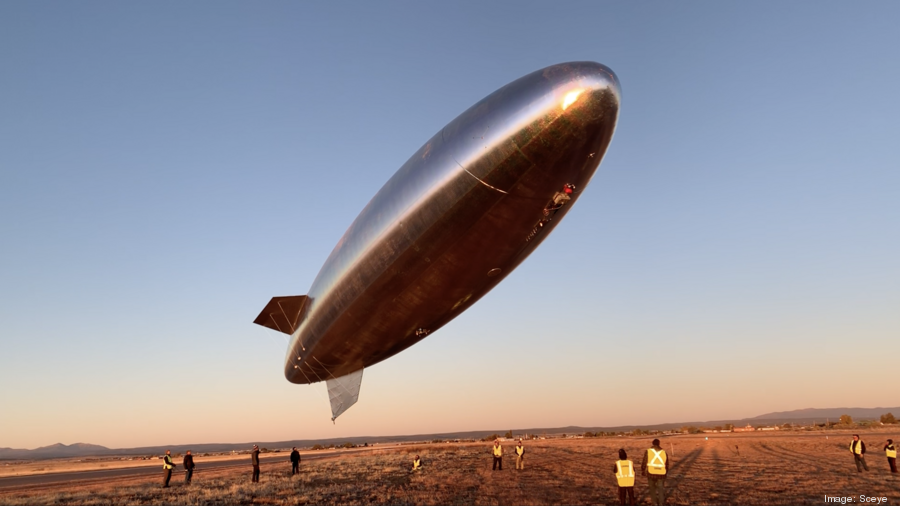
Search For Wildfires And Other Disasters From The Stratosphere
1. The Detection Window Is the Most useful thing you can extend
Every major disaster is accompanied by a moment that may be measured in minutes, but sometimes in hours — when early awareness could have altered the course of action. A wildfire that is discovered when it covers half a hectare of land is a problem of containment. Similar fires that are discovered in the case of fifty hectares is a major crisis. An industrial gas leak that is discovered within the first two hours can be isolated before it becomes a public health emergency. A similar release detected within three hours, triggered by reports from ground or by a satellite passing overhead on its scheduled trip, has dispersed into a problem with no solution that is clear. Expanding the detection window is possibly the most valuable aspect that a better monitoring infrastructure could offer, and continuous stratospheric surveillance is among the few approaches that changes the window with a significant impact, not marginally.
2. Wildfires are getting harder to Monitor Using Existing Infrastructure
The scale and frequency of wildfires of recent decades has overtaken the monitoring systems designed to monitor them. The detection systems that are based in the ground – — sensors arrays, watchtowers, ranger patrols cover too little area too slowly to spot fast-moving fires in the early stages. Aircraft response is effective but costly, weather dependent and is reactive, not anticipatory. Satellites move over a spot on a scheduled basis measured in hours. This means a fire which ignites to spread, then gets a crown, and continues to grow between passes will not give any warning. The combination of greater fires speedier spread, increased rates of spread triggered in part by dry conditions, complex terrain forms a gap that conventional approaches are structurally unable to close.
3. Stratospheric Altitude Provides Persistent Wide-Area Visibility
A platform operating at a height of 20 kilometres above surface has the ability to provide uninterrupted visibility throughout a land area that is hundreds of kilometers which includes areas of high risk for fire, coastlines, forest margins and urban interfaces all at once and without interruption. Unlike aircraft, it doesn’t have to return to fuel. Contrary to satellites, it does not disappear from view on the cycle of a revisit. For the purpose of wildfire detection specifically this type of wide-area monitoring means the platform is watching when the fire is ignited, watching as first spread occurs, and being aware of changes in the fire’s behaviour to provide a steady stream of data rather than a succession of snapshots in which emergency managers must cross-check between.
4. Sensors for Thermal as well as Multispectral Sensors Can Detect Fires before smoke is visible.
Some of the most effective technologies to detect wildfires doesn’t require waiting at the sight of smoke. Thermal infrared sensors detect heat patterns that can be interpreted as evidence of ignition even before an event has generated any visible evidence — identifying hotspots in dry vegetation, smouldering underground flames that are under the canopy of trees, and the initial signs of heat that fires are beginning to form. Multispectral imagery adds additional functionality by detecting changes to the vegetation condition — moisture stress, drying, browning -which indicate a higher flame risk in particular regions prior to any ignition event taking place. A stratospheric device that includes this combination of sensors gives an early warning of active ignition and predictive intelligence about where the next ignition is most likely, which will provide a different level of awareness to situations than standard monitoring.
5. Sceye’s Multi-Payload Approach Combines Detection With Communications
One of the main issues of major catastrophes is the infrastructure people depend on for communication — mobile towers internet connectivity, power lines — is often among the first objects to be destroyed, or overwhelmed. A stratospheric-based platform carrying disaster detection sensors and a telecom payloads will address this problem from a single vehicle. Sceye’s approach to mission development takes connectivity and observation as complimentary functions, not as competing ones. That means the same platform that detects a occurring wildfire can also provide emergency communications for responders on the ground whose networks have gone dark. The wireless tower in the skies doesn’t just see the disaster — it also keeps people connected to it.
6. Alerts for Disasters Go Well Beyond Wildfires
Although wildfires are one the most compelling use cases in the ongoing monitoring of stratospheric temperatures, the same platform’s capabilities work to a broader array of disaster scenarios. Flood events can be tracked as they progress across regions of the coast and rivers. Earthquake aftermaths — with broken infrastructure, roads blocked and people displacedget the benefit of a quick wide-area assessment that ground crews cannot do quickly enough. Industrial accidents that release harmful gases or oil pollutants into coastal waters result in signatures which can be spotted by suitable sensors from stratospheric altitude. Being able to detect climate catastrophes in actual time across all these categories requires monitoring layer that’s always there with a constant eye on the scene and capable of distinguishing between normal variations in the environment as well as the indicators of developing disasters.
7. Japan’s disaster-related profile makes the Sceye Partnership Especially Relevant
Japan is the site of a significant portion of the world’s seismic events, faces regular storm seasons that affect coastal areas, and has several industrial incidents that require swift environmental monitoring. The HAPS partnership that is between Sceye and SoftBank is aimed at Japan’s entire network and pre-commercial services in 2026, is between stratospheric connectivity as well as disaster monitoring capability. A country with Japan’s high disaster exposure and technological sophistication is perhaps the best early adopter of stratospheric infrastructure combining robust coverage with real time observation — delivering both the core communications system that the response to disasters depends on and the monitoring layer that early warning systems need.
8. Natural Resource Management Benefits From the same Monitoring Architecture
The sensor and persistence capabilities which make stratospheric platforms effective for wildfire and disaster detection can be used in direct ways for natural resource management. These applications operate at longer intervals, but require similar monitoring frequency. Forest health monitoring is tracking the spread of disease illicit logging, invasive logging, and plant shift — benefits from continuous observation that can detect slow-developing threats before they become acute. Water resource monitoring across large catchment areas, coastal erosion tracking, and the surveillance of protected areas against the threat of encroachment are all examples where an spherical platform that is constantly monitoring gives us actionable insights that even periodic visits to satellites or expensive aircraft surveys can’t replace in a cost-effective manner.
9. The Founder’s Mission Governs How disaster detection is the most important aspect of our work.
Understanding the reasons Sceye puts such a high priority on emergency response and environmental monitoring in lieu of treating connectivity as the key objective and observation as a supplementary benefitand that requires understanding the founder orientation that Mikkel Vestergaard founded the company. An experience in applying the latest technology to large-scale humanitarian challenges creates a different set of goals than a commercial focus on telecommunications would. The ability to detect disasters can’t be retrofitted onto a connectivity platform as a value-added service. It is a reflection of a belief that stratospheric structures should be actively used in cases of emergencies — climate disasters, environmental crises, emergency situations requiring early and better information can alter the outcomes of affected populations.
10. Persistent Monitoring Reconfigures the Relationship between Decisions and Data
The greater shift that stratospheric disaster detection allows can’t be just quicker responses to individual events the technology is a paradigm shift in the way decision-makers perceive environmental risks across time. When monitoring is irregular, the decision about deployment of resources, emergency preparations, or infrastructure investment have to be made with a lot of uncertainty regarding the current situation. If monitoring is ongoing in nature, that uncertainty can be reduced drastically. Emergency managers working with the real-time data feed of a constant stratospheric monitoring platform above their responsibilities make decisions based on a distinct position of information compared to those who rely upon scheduled satellite passes or ground reports. That shift — from periodic snapshots, to continuous aware of the present the thing that makes stratospheric Earth observation from platforms like those being created by Sceye actually transformative instead of more incrementally valuable. View the best sceye haps project updates for blog advice including detecting climate disasters in real time, sceye lithium-sulfur batteries 425 wh/kg, aerospace companies in new mexico, softbank sceye haps japan 2026, Mikkel Vestergaard, High altitude platform station, sceye haps airship payload capacity, what are high-altitude platform stations haps definition, whats haps, Station keeping and more.